Why campaigns fail? It’s almost always predictable.
Brands pour billions into campaigns every year. A lot of that money disappears without a trace. Here’s why, and some ways to avoid it.
Right now, somewhere, a brand manager is presenting a campaign that won’t work. The strategy deck looks polished. The creative is slick. The budget is approved. And the audience the campaign is meant to reach will never notice it exists.
This isn’t cynicism. It’s arithmetic.
The average person is estimated to encounter somewhere between 6,000 and 10,000 advertising messages every single day, a figure that has ballooned from roughly 500 ads per day in the 1970s. Every commute, every podcast break, every moment you reach for your phone adds to the tally.
10,000 AD MESSAGES A PERSON MAY ENCOUNTER DAILY IN 2025
<100 ADS CONSCIOUSLY REGISTERED BY THE BRAIN EACH DAY
1% OF ADS RECALLED BY 41% OF CONSUMERS BY END OF DAY
The human brain, sensibly, refuses to process most of this noise. Beneath the 10,000 daily impressions, research suggests we consciously register fewer than 100. And of those 100, the vast majority leave no lasting impression whatsoever. Research suggests that 41% of consumers can recall just 1–10% of the commercials they encounter within a single day. The other 9,900 messages simply dissolve into the wallpaper of modern life.
That’s before factoring in the estimated $6 billion of digital ad spend wasted in Australia alone each year , a figure we’ll come back to in another piece, because the reasons are mostly outside what any individual brand can fix. This one is about what is fixable.
Into this environment, brands launch campaigns with the solemn expectation that people will pay attention. And here’s the punchline: most of the time, they don’t. Studies examining billions in advertising spend consistently find that the majority of campaigns, estimates range from 70% to 85%, fail to deliver a meaningful return on investment.
A Rakuten survey of 1,000 marketers worldwide found that brands collectively waste an average of 26% of their budgets on ineffective channels and strategies. That’s not a rounding error. That’s billions of pounds, dollars, and euros quietly evaporating every year.
“Poorly targeted marketing means ever more advertising, and the resulting ad clutter causes consumer attitudes about and receptiveness toward advertising to plummet.” J. WALKER SMITH, KNOWLEDGE LEAD, KANTAR
So before we talk about how campaigns fail, we need to confront the baseline: the odds are already stacked against you. So it’s vital to understand what can be done to predict a more successful outcome.
First, define what success means.
Here’s the thing about campaign failure: it’s meaningless without a definition of success. And that definition: clear, specific, agreed upon before the first brief is written, is precisely what most campaigns lack.
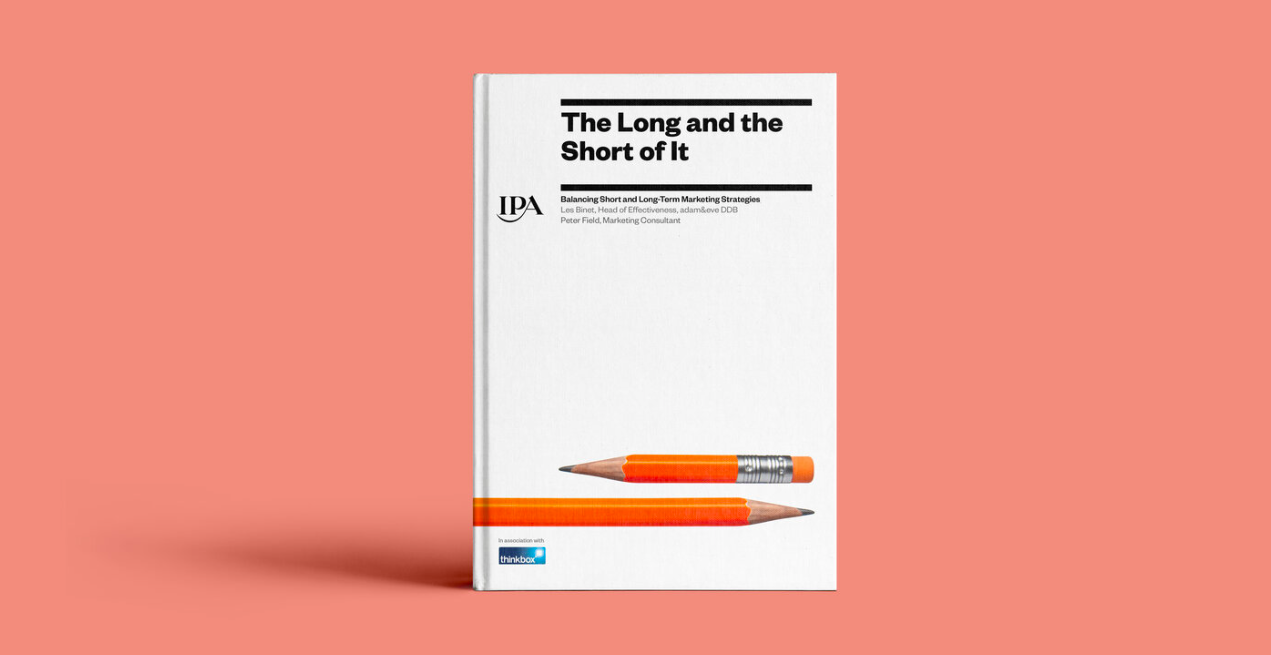
Modern marketing, as famously defined by Binet and Field in ‘The long and the short of it’, serves two profoundly different purposes and confusing them is one of the most expensive mistakes a brand can make.
Short-term activation: the art of right now.
Activation campaigns are built to move in-market buyers, people who are already considering a purchase, towards a decision. They work on the immediate nervous system of demand. The measures of success are correspondingly immediate: clicks, conversions, cost-per-acquisition, return on ad spend.
When someone searches for “best running shoes” and your ad appears with a 20% discount, that’s activation doing its job. The time horizon is weeks or months. The mechanism is persuasion. The metric is revenue, now.
Done well, activation is extraordinarily efficient. Done in isolation, it’s a sugar rush, immediate results that mask a slow erosion of the very thing that makes future activation possible: brand preference.
Long-term brand building: the art of not yet.
Brand building works on a different logic. It’s not talking to people who are ready to buy. It’s talking to people who will one day be ready, and planting a flag in their memory before that moment arrives.
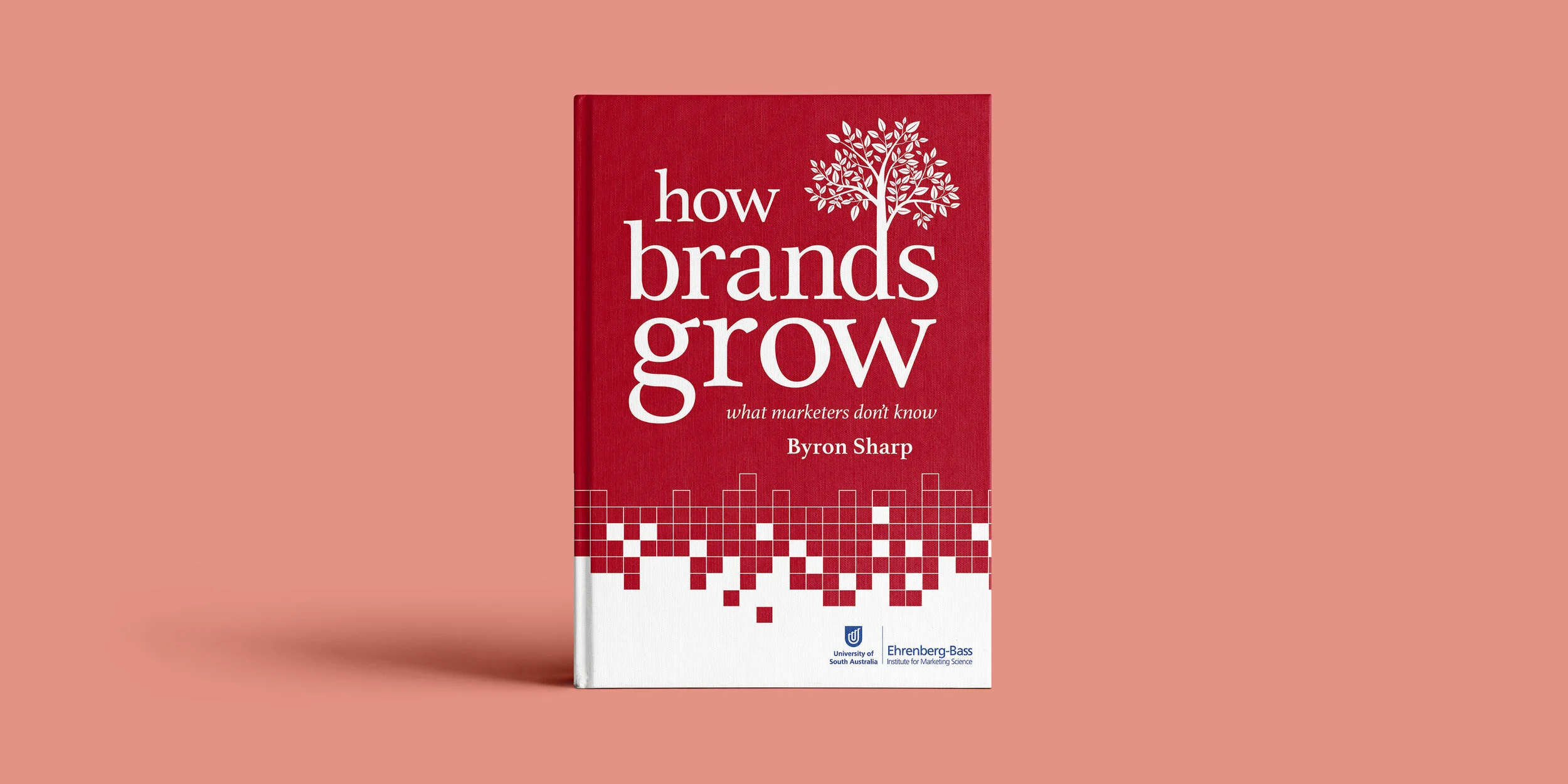
The technical term is mental availability — the likelihood that a brand will come to mind in a buying situation. The phrase comes from Byron Sharp and the Ehrenberg-Bass Institute, who demonstrated through decades of empirical work that brands grow primarily by being bought by more people, not by being loved more deeply by fewer. Mental availability is built by distinctive brand cues that stick before anyone is close to a decision.
The metrics here are different: brand awareness, prompted and unprompted recall, brand associations, consideration, share of voice. They move slowly. They’re notoriously hard to attribute to any specific campaign. Which is exactly why CFOs hate them, and why they’re systematically underfunded.
The relationship between the two matters. Brands that over-invest in activation and under-invest in brand building find that activation gradually costs more. You’re constantly fishing in the same small pond — people already almost-convinced — and paying more each time to reach them. Brand building fills the pond. It creates future demand at a lower long-term cost per acquisition.
“The most damaging failure isn’t the campaign that bombs visibly. It’s the campaign that was never properly defined. Success metrics agreed after the results come in are not success metrics. They’re a polite fiction.”
Most campaign “failures” are goal and measurement failures. A brand-building campaign judged on immediate sales will look like a failure. A 12-week activation campaign judged on brand equity will also look like a failure. Before any creative brief is written, before any channel is chosen, the question that has to be answered with precision is: what is this campaign actually for?
The hall of shame: famous campaigns that failed magnificently.
Some campaign failures are private humiliations — quietly buried in a post-campaign report, blamed on the market, and never mentioned again. Others become legend. Here are three that earned their infamy.
Tropicana Pure Premium. The invisible orange juice (2009).

In January 2009, PepsiCo’s Tropicana launched a complete packaging overhaul of its best-selling Pure Premium orange juice, a product generating over $700 million in annual sales. The brief was to modernise. The result was a masterclass in destroying brand equity through design.
The iconic orange-with-a-straw image, instantly recognisable from 50 feet down a supermarket aisle, was replaced with a generic glass of juice. The logo was rotated vertically. The cap was redesigned to look like an orange, which is clever and also entirely invisible once placed on a shelf. Consumers didn’t switch brands. They literally couldn’t find the product. Shoppers walked past it, assuming it was a new generic label.
Within two months, Tropicana’s sales dropped 20%. The brand had invested $35 million in advertising to promote the new packaging. The total damage, including lost sales, competitor gains, and the cost of reverting to the original design, exceeded $50 million. The old packaging was back by late February. The entire fiasco lasted six weeks.
The lesson isn’t that design changes are dangerous. It’s that brand recognition is a form of memory, built over decades, which lives not in the logo file but in the minds of consumers. You can delete it in a boardroom. You cannot rebuild it quickly.
Total damage: $50M+ · Timeline: 6 weeks · Verdict: Own goal
Pepsi’s “Jump In”. Peace, Love, and a Can of Soda (2017)
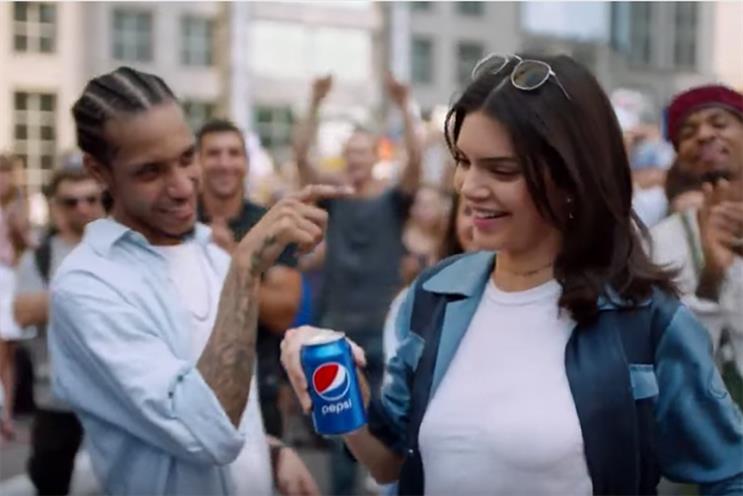
PepsiCo again. In April 2017, Pepsi launched a film featuring model Kendall Jenner leaving a photoshoot to join a vague, aesthetically curated protest march. The climax: Jenner approaches a police officer and hands him a can of Pepsi. The officer smiles. The crowd cheers. Harmony is achieved, apparently, through the power of carbonated beverages.
The ad was intended to “project a global message of unity, peace and understanding”, Pepsi’s own description. In practice, it drew on the visual language of the Black Lives Matter movement and suggested that a can of cola was the missing ingredient in resolving racial injustice in America. The backlash was so immediate and so overwhelming that Pepsi pulled the ad within 24 hours. Research indicates that the brand reached its lowest consumer perception levels in nearly a decade.
What makes this failure so instructive is that nobody apparently said out loud, “this might look like we’re trivialising people being killed.” Fellow model Ashley Graham, commenting afterwards, noted: “I think my team probably would have nipped it in the bud before anything happened.”
The Pepsi ad is the purest example of what happens when brand purpose becomes untethered from brand reality. When the desire to seem relevant outpaces understanding of what relevance means, and what trying to be part of a social movement where you don’t belong does to your credibility.
Pulled after: 24 hours · Perception damage: Lowest in a decade · Verdict: Purpose without substance.
Bud Light and Dylan Mulvaney. The partnership that became a culture war (2023).
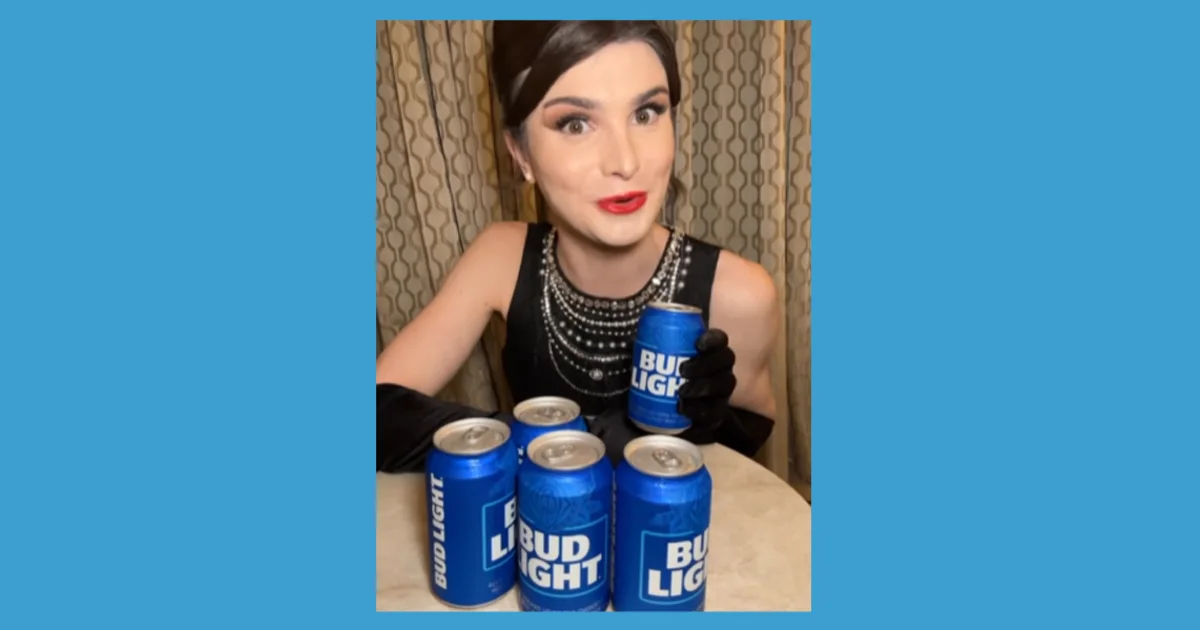
Where Pepsi just looked laughably out of touch, Bud Light read the room so badly the whole building collapsed.
In spring 2023, Bud Light sent personalised commemorative cans to transgender influencer Dylan Mulvaney to celebrate her first year of womanhood, as part of a promotional partnership. The product wasn’t even for sale, it was a single gifted item shared on Instagram. What followed was one of the most commercially devastating brand controversies in recent memory.
Conservative consumers launched a sustained boycott. Bud Light’s sales fell approximately 30% . The brand lost its position as the top-selling beer in the United States, a title it had held for over two decades. Parent company AB InBev reportedly saw $27 billion wiped from its market value. The crisis was then compounded by a response widely criticised as slow, equivocal, and ultimately satisfying nobody: conservative boycotters weren’t appeased, and LGBTQ+ supporters felt the brand had abandoned Mulvaney under pressure.
Bud Light’s core audience did not see the partnership coming, had no brand narrative into which it could be integrated, and experienced it as a sudden values change – which is lethal for beer brands who are a label the audience wears. The brand actually represents the drinker’s values, and they know it.
This move did nothing for Bud Light and probably inflamed discrimination towards the transgender community. The oft-repeated lesson being that the people who work on branding and campaigns are not the audience. Just because you’re happy with a certain label it doesn’t mean the audience will be.
Sales decline: ~30% · Market value lost: ~$27 billion · Verdict: strategic incoherence
Ten ways to guarantee your campaign fails.
Consider this a checklist. If your campaign ticks more than three, revisit the brief. Or possibly your next career move.
- Launch without a clear objective.
If the team can’t answer “what does success look like, measured how, by when?” before the campaign goes live, the campaign cannot succeed. You can’t hit a target that doesn’t exist. Yet only 23% of marketers report feeling confident they’re tracking the right KPIs. Campaigns launched without agreed objectives are evaluated, inevitably, against whichever metrics look best in hindsight. That isn’t measurement. It’s guesswork dressed up as analytics. - Confuse activation with brand building — or ignore one of them entirely.
Spending 90% of the budget converting people who are already ready to buy, while building nothing in the minds of people who aren’t, is a strategy for slowly increasing your cost per acquisition until it kills you. The other direction — beautiful brand awareness with nothing helping anyone actually purchase the product — produces lovely brand trackers and a P&L that doesn’t. Binet and Field’s empirical answer was a 60/40 long-term/short-term split. That ratio shifts by stage and category. Whatever it ends up at, picking one and ignoring the other is a tax on the future. - Mistake the conference room for the real world.
The campaign that looks brilliant in a pitch deck and gets the room nodding is under no obligation to work in a supermarket, a social feed, or a moment of genuine distraction. Harvard Business Review attributes 85% of failed campaigns to shallow or missing market insight — meaning the brand researched what it wanted to hear, not what it needed to. Or didn’t research at all. As Bud Light demonstrated at considerable expense, the world the campaign enters is just as likely to see something the brand didn’t, or to see nothing at all. - Talk to everyone and connect with no one.
The Ehrenberg-Bass position is that brands grow by reaching all possible buyers all the time. True, but financially viable only for the biggest brands. For everyone else, a campaign trying to be relevant to everyone tends to say something so broadly generic it says nothing at all. And that level of reach is financially out of reach anyway. About 42% of marketers cite audience mismatch as their single most expensive mistake. Specificity isn’t limiting. It’s amplifying. A message that speaks precisely to someone generates genuine connection, especially if your goal is activation. If you’re trying to reach people who are likely to be in-market, your targeting is all important. - Strip the brand from its own advertising.
Generic aspirational imagery, unattributed humour, lifestyle footage with no clear brand perspective — these are free media for your competitors. You’re building the category at best. Distinctive brand assets — colours, characters, sounds, taglines, visual signatures — exist because memory runs on repetition and recognition. Every campaign that jettisons them to feel “fresh” starts rebuilding mental availability from zero. Sometimes the old orange-with-a-straw really is the product. - Pursue cultural relevance without cultural understanding.
Nothing dates an organisation more precisely than the attempt to appear culturally current without anyone in the room who actually is. The brand that discovers a protest movement, an internet meme, or a youth subculture about 18 months after the rest of the world did, and then builds a campaign around it, will be correctly identified as an imposter within minutes. How do you do, fellow kids? See: virtually every corporate attempt to ride a meme. See also: Pepsi’s 2017 contribution to protest theory. - Give it three weeks, declare failure, and pivot.
Marketing works over time, especially brand marketing. A campaign abandoned before the paint dries because the dashboard isn’t showing immediate conversion lifts is not a failed campaign. It’s an impatient organisation. The best-known brand campaigns in history — the ones that built category-defining mental associations — ran for years. “Three weeks and we’ll know if it’s working” is not a testing framework. It’s anxiety dressed up as rigour. - Measure vanity, ignore value.
Only 36% of digital ad impressions are viewed by a human for more than one second: but impressions feel good because they go up. They feel especially good when nothing else is. But a campaign that generates 10 million impressions and no detectable shift in brand consideration or purchase intent has achieved nothing except a vaguely impressive slide in the quarterly review. Impressions measure exposure. They don’t measure effect. A campaign seen by everyone and remembered by no one is, by any meaningful definition, invisible. - Let the campaign be designed by committee until no one is responsible for it.
The process: creative agency produces something interesting. Brand manager requests small changes. Regional markets ask for localisation that removes the idea. The production budget is split across 800 items. A senior stakeholder adds a feature nobody asked for. The agency produces a compromise that satisfies every individual concern and serves none of the campaign’s objectives. This is the workflow responsible for approximately 40% of all advertising that is technically correct, strategically sound, and completely impossible to remember. Good creative decisions require someone who cares being allowed to act before the brand turns to bland. - Mistake a campaign for a strategy.
A campaign is an event. A strategy is a direction. The brand that launches brilliant individual campaigns without a coherent positioning — without a clear, consistent answer to “what do we stand for, and why does that matter?” — is spending money on fireworks. Spectacular in the moment. Forgotten by morning. The brands that compound value over time, that build genuine mental availability and pricing power, do so not through any single campaign but through relentless consistency in the ideas they stand behind. A great campaign in service of no strategy is just an expensive piece of noise.
The uncomfortable bit.
Campaign failure isn’t a mystery. It’s almost always predictable — the logical consequence of unclear objectives, muddled strategy, insufficient consumer understanding, or organisational processes that prioritise internal consensus over external impact.
The 10,000 daily messages your audience ignores are not the enemy. In a strange way, they’re the opportunity. In an environment of relentless noise, anything genuinely distinctive — a clear brand idea, executed with conviction, measured honestly against real objectives — stands out. Not because it shouts louder. Because it’s one of the few things that actually means something.
The campaigns that work do so because someone, somewhere, decided what the campaign was actually for, made something that earned the right to be remembered, and gave it the time and the budget to do its job. That combination — clarity, creativity, commitment — is rarer than it should be.
Which is, of course, exactly why so many campaigns fail.
Explore our blog